Events as a tool for driving social change

Events as a tool for driving social change

11/18/2025 - 16:35

Events have long been powerful tools for driving social change and fostering community engagement. By bringing people together around a common cause or interest, events can raise awareness, inspire action, and create lasting impacts. One of the key strengths of events is their ability to create a sense of unity and shared purpose. When people gather in support of a cause, they are more likely to feel a sense of belonging and commitment to that cause. In addition, events can have a direct economic impact on communities. This economic boost can be particularly significant for marginalised or underserved areas, helping to address inequalities and promote social equity (Events – dossier on Social Impact, November 2023, Gerritsen and Van Olderen, 2020). In this article we show perspectives and examples of this development from the perspective of the business event industry, the educational programme of Events for Business, and from the student perspective.
Leisure & Events
  • Uncover

This article was written for Uncover magazine - Meaningful Leisure Experiences

Author: Dorothé Gerritsen is lecturer of Event Marketing at Academy for Leisure & Events, Breda University of Applied Sciences.

Industry perspective
D&B Eventmarketing is the oldest B-to-B event marketing agency in the Netherlands. It has existed for 42 years now. In 2023, it merged with digital experience agency FX Agency in the Daymakers agency group. Its business consists of about 60% employee engagement and 40% relationship marketing for a wide range of clients and stakeholders. Pieter Bas Boertje (interviewed on 14 February 2025, CEO of Daymakers and founder of D&B Eventmarketing) explains how they got involved in events for the good cause. It grew organically, starting about 18 years ago with a benefit gala for Fonds Gehandicaptensport. In addition, D&B works for the Helen Dowling Institute (psycho-social healthcare for people who suffer from cancer and their relatives and friends) and for Right to Play (organisation founded by Olav Koss, speed skating champion in the eighties), who use sports and games for children to learn in difficult parts of the world, like war zones (Gaza). Stichting Papageno (founded by Jaap and Aaltje van Zweden) organises events for people who suffer from autism. 

Last but not least, there is the Amsterdam City Swim. D&B has changed this into a community event with a year-round communication process and swimming in the Amsterdam canals as the climax. It is a really meaningful community event. It is organised for the benefit of people who suffer from ALS. Some 3,000 people swim two kilometres through the Amsterdam canals. There are 30 so-called ‘waves’ and each of them has an ALS hero(ine) (a patient, or someone who already passed away). This is shown not only during the event but also before and after it via (social) media. A lot of money is raised through this. Big sponsors are also involved and they adopt a ‘wave’ as well (like Picnic, Basic-Fit, Ola, Atradius, Cupra, and Versace). 

The main learning effects are:

  • Younger generations feel far more connected to the good cause and find it very important to also be meaningful in their (working) life.
  • Nowadays, you see more creative ways and twists to these galas, because the story of the good cause needs to be told. This way, it is far more meaningful and appealing. So storytelling and using the story in all touchpoints of events has become more important.
  • Events provide a powerful platform for telling authentic stories that touch the heart and create meaningful experiences after the event too.
  • One last thing which is very important is the fact that event managers tend to think the event is over when the time slots have come to an end. But in fact, this is just the start of it! You should focus not only on the event and the people being there but also on making content during the event that you can use to involve the ones who are not there!

Jolanda Jansen is CEO of Rotterdam Ahoy. Ahoy is known as a venue hosting many events, ranging from entertainment, sports and trade shows to corporate events and conferences. Furthermore, Ahoy  organises a number of events such as ABN AMRO Open, Six Day Cycling and trade fairs such as Europort and Infratech. Jolanda sees the potential and power of events like this: “In the past years, we have learned that ‘live events’ fulfil a desire to meet, to be inspired, to share memories, to have fun; whether it concerns B-to-B events like conferences and trade shows or sports and entertainment. People love to connect, meet new people and get energised by live experiences. As an industry, we have an economic value, but even more importantly, we bring social values.”

Education perspective
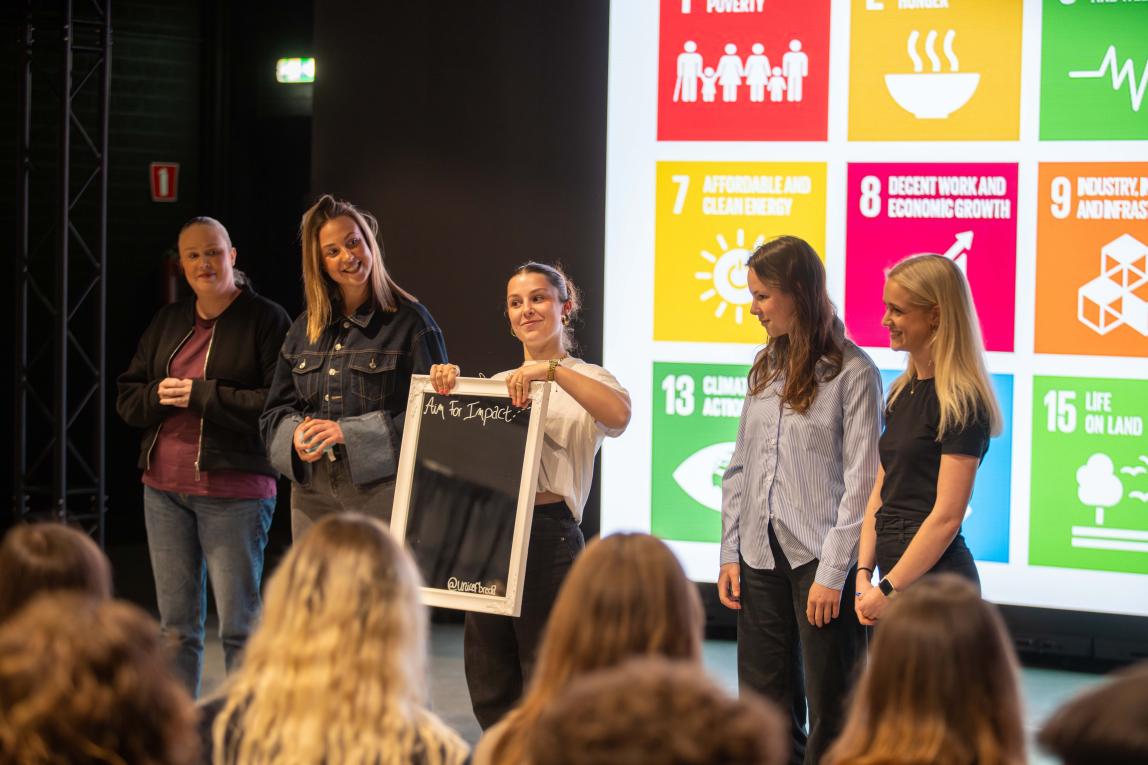
At Breda University of Applied Sciences, Academy for Leisure & Events, Events for Business specialisation, we have made a shift like the whole industry towards events being more and more a platform for impact on all kinds of topics and levels. For instance, diversity and inclusion, sustainability (food waste, no-show, etc.), not only in the production of events but also the events as a platform for people to meet and discuss important topics in our society. One of the examples of projects we are working on include the SDG Action Festival. This is a long-term collaboration between five universities all over Europe on the UN Sustainable Development Goals. The main objective is to improve the students’ international competences, more specifically, their commitment to global engagement. This is a win-win situation since students involved collaborate with different cultures on a global level, and they develop and execute an event themselves connected to one or more SDGs. 

Student perspectives
There are many (social) media and the public’s attention is very fragmented. What will the future bring? Let’s have a look at some views and visions of the future generation on events as a driving force for social change and community engagement. And what will be or should be their impact for our education? 

Mia Milkovic (fourth-year student of Events for Business) sees it like this. “Simply put, people want to be included in society, the easiest way to be exposed to that environment is through events, therefore, events have a huge impact on society and can influence social change. The future is unpredictable. However, I am confident events are here to stay and make a difference. Events can be used in many ways and imagination is the greatest tool used for creating and designing an experience. Without a doubt, the education of Events for Business prepares us for the future, with a curriculum that includes practical components like the SDG Action Festival - designed to engage with real clients , tackle current challenges, and step into leadership roles. 

And finally, Ella Olsena (fourth-year student of Events for Business) has this view. “With a large part of our daily activities moved to the digital space, people are constantly overwhelmed with information overload and personal interactions are becoming less frequent. The rapid development of technology and AI has transformed online environments to the point where it is often difficult to distinguish real and synthetic content. And even though events have also adapted to digital environments, personal contact during offline events brings the most value to people. Digitalisation is already making people want to ‘disconnect’ and I believe this feeling will continue to grow as more aspects of our life will become digitalised. There will be a newfound appreciation for in-person interactions, and events will play a significant role in fostering these interactions.”

Conclusion
All in all, events are becoming more relevant and important to make the difference. Especially, in the society we live in these days. Future generations see and feel this and this provides great opportunities for the future of events as a driving tool for social change. 

Special thanks go out to Pieter Bas Boertje, Jolanda Jansen, Mia Milkovic, and Ella Olsena for their contributions.

Sources

- Gerritsen & Van Olderen (2020), Events as a Strategic Marketing Tool. Oxfordshire: CABI.
- High Profile EVENTS: magazine Business Events, Dossier Social Impact, November 2023.
- Sdgactionfestival.eu