The Sesc Sports Circuit

The Sesc Sports Circuit

08/25/2026 - 13:19

The state of São Paulo, Brazil, is home to more than 44 million inhabitants distributed across highly diverse territorial realities. Although it concentrates extensive urban infrastructure, many municipalities in inland and coastal areas still face limitations in accessing continuous sport and leisure opportunities. Within this context, Sesc São Paulo operates as a private public-interest institution committed to promoting social well-being, particularly for workers in the commerce of goods, services and tourism, along with their families.
Leisure & Events
  • Uncover

This article was written for Uncover magazine – From Global to Ground (10th edition). You can read the full magazine here. 

Authors: Carol Seixas is Sports Manager at Sesc São Paulo. Leonardo Calix Soares is Project Manager at Sesc São Paulo.

With a long-standing tradition in sport-for-all programmes, Sesc develops initiatives through leisure that integrate non-formal education, culture and health as interconnected dimensions of human development. In this framework, the Sesc Sports Circuit was created as a strategy to expand the institution’s territorial reach, bringing sport activities to municipalities that do not have permanent Sesc facilities.
The initiative connects local governments, community leaders, and nationally recognised athletes, broadening access to sport participation and strengthening community bonds among diverse stakeholders.

The Sesc Sports Circuit
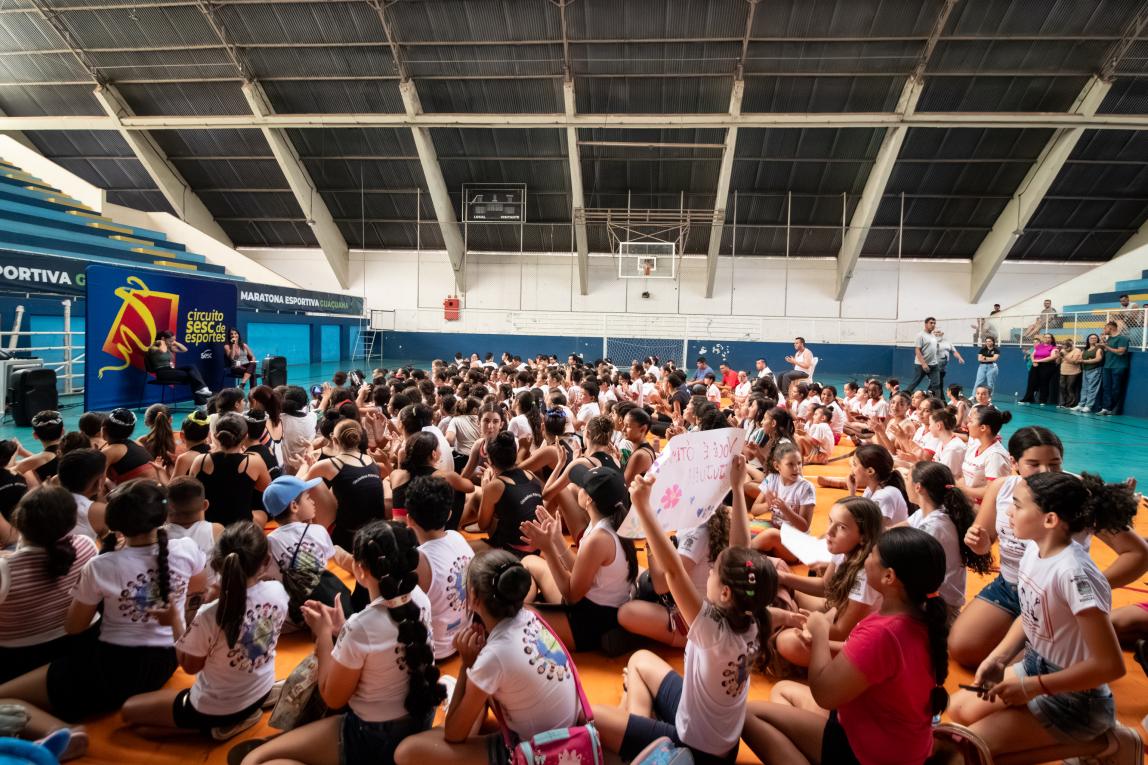
Held between 6 November and 14 December  2025, the Sesc Sports Circuit was a state-wide community sport initiative that reached 35 municipalities across São Paulo. It promoted sport classes, friendly tournaments and workshops with Olympic and Paralympic athletes of national prominence. The initiative served 7,248 participants, involved 12 professional athletes, and included the active participation of local authorities, such as 13 mayors, 29 municipal secretaries and 14 union representatives.

The project was guided by clear principles: all activities were sport-based, aligned with each municipality’s local sporting identity or tradition, and implemented exclusively in cities without Sesc venues. This straightforward structure ensured methodological coherence while strengthening institutional presence in new territories.

Activities included volleyball, basketball, football, table tennis and other modalities, delivered by athletes and instructors from diverse backgrounds, reinforcing the project’s commitment to inclusion and representation. These facilitators conducted practical sessions, engaged in dialogue with participants and shared their personal journeys, fostering proximity between sports icons and local communities.

Sports as a tool
As a free and open initiative hosted in public community spaces, the project promoted sport in leisure time as a tool for social inclusion, encouraging more active lifestyles. The events brought together people from different areas of the city and diverse social backgrounds, inspiring them through the athletes’ stories and motivating them to practise sports in public spaces.

The project acted as a catalyst for local networks by connecting athletes, public authorities, Sesc professionals, and community leaders around a shared goal. Sesc coordinators observed that the initiative encouraged public managers to reflect on both short-term actions and long-term sport policies.

Moreover, it strengthened the qualified use of public leisure infrastructure, such as sports courts and public squares, attracting participants of different ages and sporting backgrounds. Community leaders reported that, after the events, more residents began using these public and free-to-access venues regularly. In this sense, the Circuit also functioned as a way of drawing attention to existing leisure facilities and encouraging citizens to reclaim and occupy them.

From a communication perspective, the Sesc Sports Circuit adopted a unified visual identity that integrated activities carried out in municipalities often located hundreds of kilometres apart. Consistent branding allowed communities to recognise themselves as part of a broader state-wide movement. In smaller municipalities, the presence of a structured visual identity and professional communication materials enhanced local pride and reinforced the legitimacy of the project. The Sesc Sports Circuit also generated 361 media features across open and cable television, radio stations, and newspapers, expanding public visibility and conveying its message to millions of people.

Connection with the WLO
The Sesc Sports Circuit aligns directly with the World Leisure Organization’s global agenda by affirming leisure and sport as social rights and instruments for societal transformation. For Sesc São Paulo, participating in global networks such as the WLO is essential to fostering international knowledge exchange and deepening engagement in debates on community-based sport policies. Through this connection, Sesc enhances its local impact while positioning Latin America as a territory of social innovation in the field of leisure practice and policy.