How Nîmes is turning high-end tourism into a local asset
08/27/2026 - 13:57

- Uncover
Authors: Andrew Shaw and Charlotte Demougin are lecturers of leisure and events management at BUas. Andrew specialises in urban leisure practices and Charlotte has a background in PR, as well as being a Nîmes native.
“It’s funny, because ’luxury’ doesn’t naturally match Nîmes in my mind. But recently, cosmetic and fashion brands have opened here, giving the city a more luxurious feel.” (Local resident)
Nîmes’ location means it is surrounded by some tough competition for tourist attention. Two hours from Barcelona, an hour from Marseille, and often overshadowed by Montpellier, a university town that has positioned itself as a young, creative, and digitally connected city. Avignon, just 30 kilometres east, has its long-running cultural festival and a papal palace. Arles has focused itself on contemporary art and the LUMA Foundation, attracting a wealthy international audience willing to spend money. In this competitive landscape, Nîmes has taken a different path.
The Nîmes strategy
While Nîmes is already well established as a destination with exceptional Roman heritage, anchored by the baseline ‘All Roads Lead to Nîmes’, a deliberate nod to Rome, the city’s strategy focuses on layering heritage, gastronomy, lifestyle, and authentic experience, combined into a proposition aimed at visitors who are not looking for a package, but for a place. The goal is not to overshadow the Roman narrative, but to enrich it and turn Nîmes from a one-day heritage stop into a full, multi-layered destination worth lingering in.
This is framed as premium leisure tourism: attracting higher-value visitors through high-quality amenities and deeper engagement with local culture. In practical terms, this means investing in the things that make tourists want to stay longer, such as a bustling and beautiful city centre, partnerships with local food and wine producers, and a calendar of events that gives visitors a reason to return.
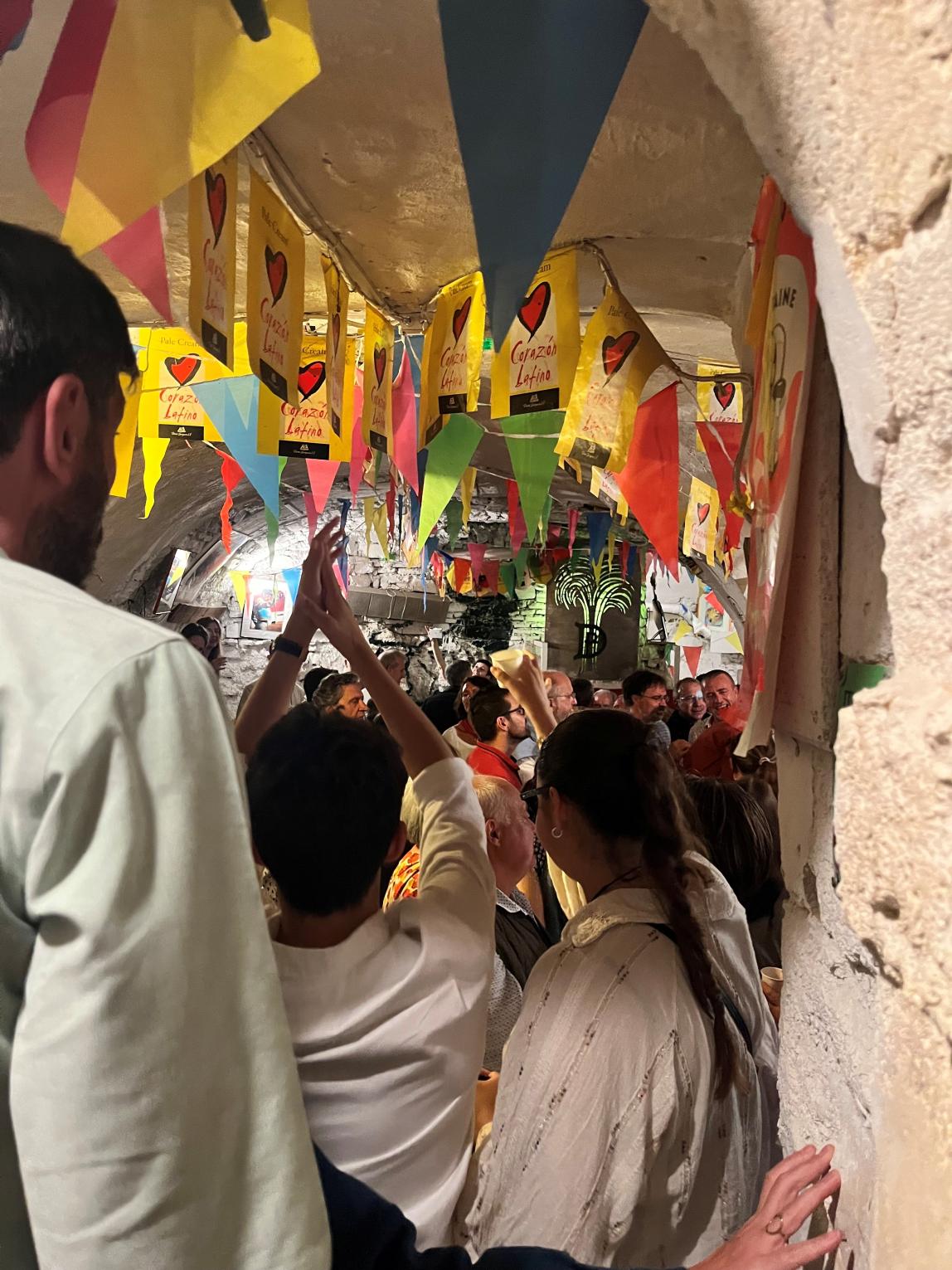
Crucially, several of these initiatives serve residents as directly as they serve visitors. The pedestrianisation of Boulevard Victor Hugo during events, and the showcase of local gastronomy through Costières de Nîmes, for example, give residents access to their own city in new ways, while simultaneously generating the kind of authentic local atmosphere that premium visitors are seeking.
Balancing premium tourism and everyday urban life
We know from established theory that when tourism is at its most sustainable, it incorporates local communities in activities and locations, rather than using local heritage as a backdrop. Researchers like Greg Richards have long argued that when tourism is anchored in genuine local culture, the economic and social returns increase (Richards, 2021). The question is whether premium leisure tourism, which is often focused on heritage zones and high-end accommodation, can actually reach the neighbourhoods and residents beyond the postcard photo locations.
In Nîmes, the results are mixed. The city's 2025 tourism figures show that nearly half of all museum visitors at sites like the Carré d'Art and the Musée de la Romanité are local residents from the city and the wider region. In this sense, cultural infrastructure built to attract international visitors is, in practice, also serving the people who live there. Other initiatives serve residents as directly as they serve visitors: pedestrianisation of the city centre, investments in renovation, cultural events during peak season. The JeuDivins partnership with Costières de Nîmes, which brings local wine producers directly into city centre events, offers an example of tourism spending connecting to the local agricultural economy rather than bypassing it.
“The city centre has revived through renovations, pedestrianisation, and better public transport, making it more accessible.” (Local resident)
But premium tourism will always be driven towards the city centre. The clustering of the Roman city with the designer hotels and gastronomy tends to leave peripheral neighbourhoods untouched, or worse, under pressure from gentrification, such as increased short-term rental accommodation pushing up rental and property prices. It cannot be assumed that communities automatically benefit from high visitor spending. It requires deliberate policy choices about where revenue is reinvested and who is included in planning decisions. As Claudio Milano and others have noted, the difference between tourism as an economic benefit and tourism as an extractive element usually comes down to good governance (Milano et al., 2019).
“Nîmes cannot do without tourism, but there shouldn’t be too large a gap between the tourist centre and the outskirts, or it could create frustration.” (Local resident)
An educational opportunity
BUas Urban Life & Placemaking students examined the Nîmes case as part of their Place Branding course. Invited by the tourism office, they investigated local feelings surrounding the policy and contributed to developing a strategy that maximises local benefits. The tourism office welcomed the opportunity to gain an outside perspective and a broader view.
Based on resident interviews and analysis of the city’s tourism data, students identified several ways to extend premium tourism beyond the historic centre. Students recognised the importance of enhancing tourism’s impact in outlying neighbourhoods by nudging visitors to explore residential areas and seek independent local experiences. Focusing on ways to include the city’s existing network of municipal local markets as anchors for a more authentic (and distributed) visitor experience was seen as another helpful strategy.
Whether the city acts on the students’ input remains to be seen, but the exercise itself illustrates a broader point: a premium tourism strategy needs input and support from the communities it claims to benefit.
From the lecturer’s perspective, the Nîmes case offers a great opportunity to challenge students to address multiple factors in a complicated situation. Students must understand both the local context and broader themes of luxury tourism and local impact. Engaging with such challenges prepares them well for an increasingly complicated leisure and tourism environment.
“It’s a path the current municipality has chosen. For me, after more than 30 years here, ’luxury’ and ’Nîmes’ don’t fully go together yet.” (Local resident)
Broader implications
The overtourism debate has largely been centred on large cities like Amsterdam, Barcelona or Venice, where visitor numbers have considerably affected the lives of locals, where residents have taken to the streets, and local governments have implemented broad policy instruments like tourist taxes, banning Airbnb or cruise ships. Nîmes is a different scale, and its luxury strategy reflects that. The ambition is not to reduce visitors, but to reshape who comes, for how long, and how deeply they engage with the city. Such a tourism strategy would serve as a lever for a more equitable redistribution of economic benefits across the local ecosystem.
Alignment between tourism development and local economic inclusion strengthens both the social case and the long-term sustainability of the strategy. The JeuDivins/Costières de Nîmes partnership is a small, but replicable example of tourism revenue finding its way to local producers, rather than international hotel chains.
For other mid-sized European cities with significant heritage assets, the potential lesson is to think of luxury not as an aesthetic, but in terms of the broader value that high-end tourism can bring.
Ultimately, this all focuses on the broader question of governance. Premium tourism strategies require active reinvestment policies, not just attractive branding. The extent to which the benefits of Nîmes' approaches are extending into neighbourhoods, local employment, and public space, remains the measurement by which any such strategy should ultimately be judged.
Sources
Richards, G. (2021). Rethinking Cultural Tourism. Edward Elgar Publishing. https://doi.org/10.4337/9781789905441
Milano, C., Novelli, M., & Cheer, J. M. (2019). Overtourism and Tourismphobia: A journey through four decades of tourism development, planning and local concerns. Tourism Planning & Development, 16(4), 353–357. https://doi.org/10.1080/21568316.2019.1599604