’Young creatives should be able to mess around’

’Young creatives should be able to mess around’

02/23/2026 - 14:37

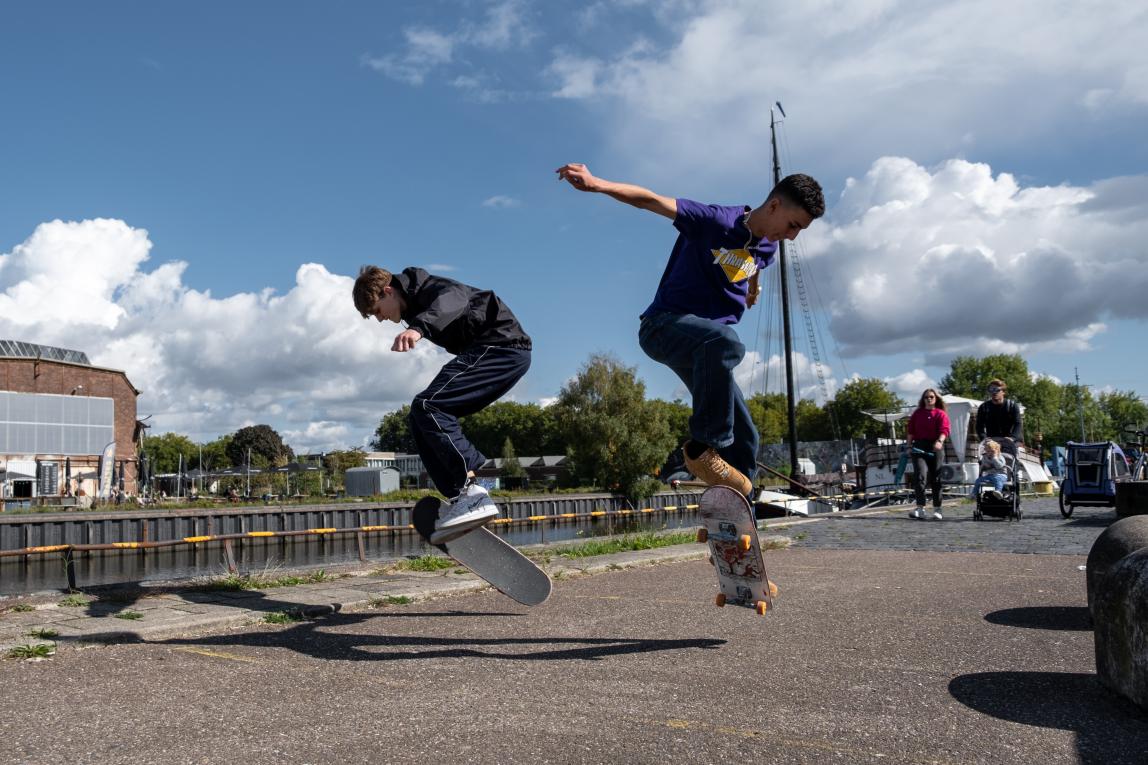
Peter van der Aalst has been working on his Professional Doctorate (PD) for two years, conducting applied research into street culture or, more generally, bottom-up initiatives by young creatives. These forms of culture have value for urban development at multiple levels. They attract young talent, contribute to inclusivity, enrich the cultural infrastructure, and can help make cities future-proof. He applies the knowledge gained to education within BUas, and also puts it into practice in the field.
Leisure & Events
  • Research

Van der Aalst conducts both qualitative and quantitative research within the cultural sector. He combines interviews and focus groups with a large-scale survey that he has conducted in collaboration with research agency Verian. The aim of his research is to give young talent opportunities in the city. They form what he calls the city’s 'humus layer'. 'If you don't give young people the chance to experiment, your city will slowly wither away’, says Peter van der Aalst. By this, he means that young people must be given opportunities to develop culturally. For example, the step from a residential neighbourhood to the city centre is often a big one. If you enable young people to experiment, explore, and learn from others, it strengthens the city's creative ecology.

Nightclub and night culture catalyst role in Tilburg
Whilst Van der Aalst conducts research, he is also working as a connector to set things in motion. For instance, he is working with social programmer Chiara Riboch on a project with pop music venue 013 and youth organisation R-Newt on a nightclub for young people in a basement opposite 013. A venue like 013 is a well-established institution in the cultural sector and can therefore be difficult to access for young creatives seeking performance opportunities. By launching an initiative that bridges youth work and 013, the step for the new generation of creatives becomes smaller. In that club, they can experiment, perform for a small audience, and build their community, as a prelude to performing on larger stages in the future.

Such a project serves multiple objectives. Young people from the neighbourhood are given a chance to develop and potentially progress to the mainstream cultural infrastructure. The aim is to generate impact on multiple fronts. For 013, it brings artistic value because of the content that young makers bring; it is socially relevant to contribute to the development of young creatives and thus to Tilburg; and it is also commercially sensible to attract new talent that represents the whole city. This intervention could encourage other cities to follow suit. For instance, Van der Aalst is already in talks with partners in Breda and Eindhoven to explore how the creative ecology in these cities can be further developed. 

Additionally, Van der Aalst has been appointed by the municipality of Tilburg as Kwartiermaker Nachtcultuur (which roughly translates as ‘night culture catalyst role’). In this role, he studies night-time strategies in other cities and engages with stakeholders from the city's night culture and nightlife sector. The aim is to identify the significance, opportunities and bottlenecks of and for the night, and to develop recommendations for a night-time strategy for Tilburg.

In education
Van der Aalst is a member of the management team of the Leisure & Events domain and he is coordinator of the Strategic Value Creation module in the Master Strategic Events Management programme, where he also teaches. The combination of practice and education is essential in his work.

He applies models from, among others, colleague professor Greg Richards, such as the concept of the Creative Ecology of the City. He uses these models both in his lectures and in his practical projects.

Network in the cultural sector
To know what is happening in the cultural sector, Van der Aalst considers it important to be involved in the sector. He sits on various boards and committees:

  • TURF Event (Breda) - chair of the board
  • Roadburn (Tilburg) - chair of the Supervisory Board
  • ASML x Brabant C - impact committee
  • Blind Wall Gallery - board member
  • Graphic Matters - board member

Through TURF Event, he works on positioning Breda as a city of applied technology and creativity. The festival brings together the cultural and tech sectors and is supported by the municipality. Peter also works with Breda Marketing with the aim of setting up initiatives in Breda. 

Mission and impact
In his PD research, Peter van der Aalst advocates his mission, which is that cities must continue to provide space for young people to experiment.
He distinguishes three types of impact that he wants to generate:

  1. Artistic/content-related impact: New product development, also for the hospitality sector. New trends and concepts often emerge from the underground scene.
  2. Social impact: Offering opportunities to young people, especially to those for whom the step towards the cultural infrastructure is significant, such as young people from underprivileged neighbourhoods, often with a migration background. But young people from more affluent neighbourhoods who want to follow a different path from their parents should also be given space to experiment.
  3. Commercial impact: For the sector and the city. Without new developments and new audiences, cultural institutions may eventually have to close their doors, causing the city to lose its vibrancy and appeal.

Future
The PD track lasts five years, two of which have now passed. Van der Aalst actually sees himself as a kind of entrepreneur, constantly engaging with partners and education colleagues while spotting new opportunities. For him, the combination of conducting research and immediately applying it in practice works particularly well. The opportunity to work on this PD ensures that Van der Aalst has the chance to do more than just work on education and research. As a connector in and with the sector, he actively tries to make a visible difference in society.


Credits second photo - TURF: Archivedprojx